
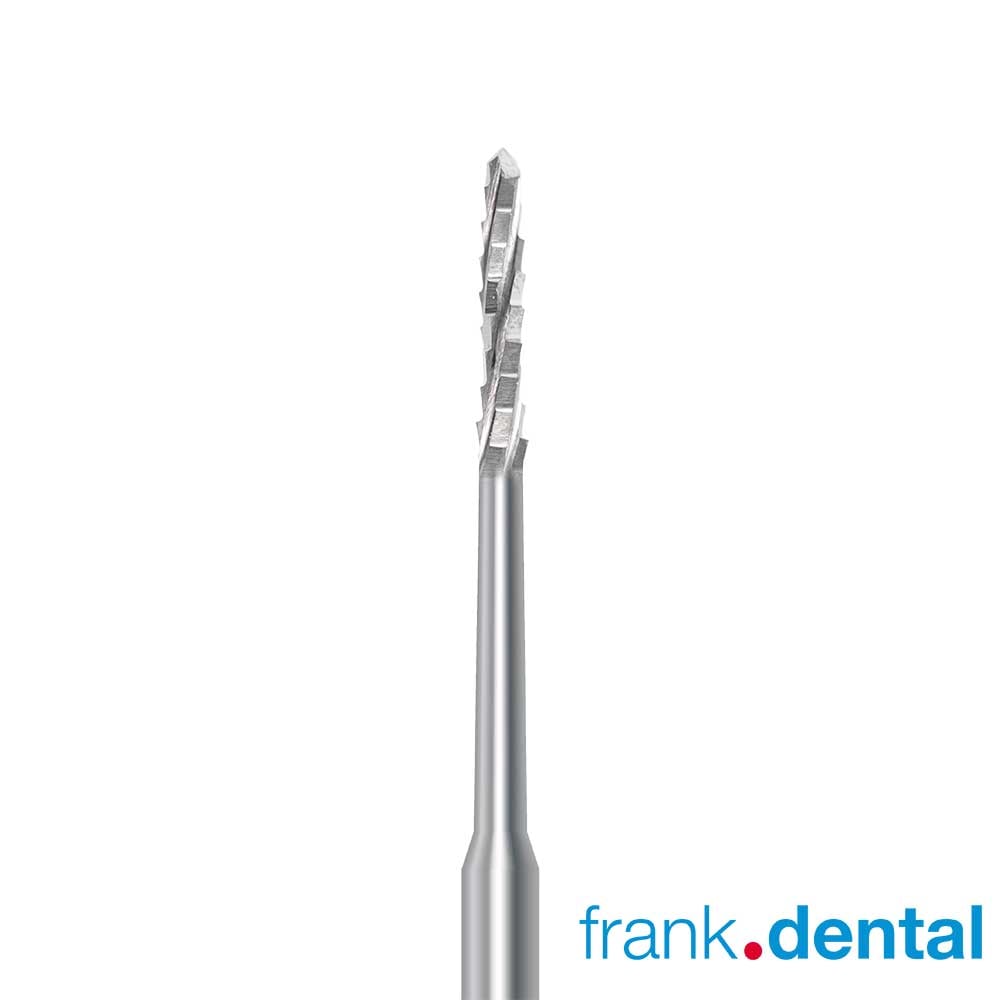
C.162.012.FGXXL-35 Frank Dental Lindemann Surgical bur 35mm in length for the FG handpiece
Pack size: 5
Price per item: £14.50(ex. VAT) £17.40(inc. VAT)
Frank Dental C.162.012.FGXXL-35 Lindemann Surgical Bur – 35mm Extra-Long, 1.2mm Diameter
Precision Surgical Cutting with Extended Reach
The Frank Dental C.162.012.FGXXL-35 Lindemann Surgical Bur is a specialist extra-long tungsten carbide surgical bur designed for dental professionals who require precision, effective cutting performance and extended access during demanding oral surgical procedures. Featuring a 35mm overall length, a 1.2mm diameter cutting head and a single-cut blade configuration, this surgical bur is designed for selected applications involving tooth sectioning, root separation and appropriate hard-tissue cutting.
Combining a slim cutting profile with an extended working length, the Frank Dental Lindemann surgical bur offers a practical option for clinicians who need to reach difficult surgical sites while maintaining control over the cutting process. Its 1.2mm diameter is particularly relevant when a narrow cutting path is desirable, potentially helping to minimise unnecessary bone removal compared with wider cutting instruments, depending on the clinical situation and surgical technique.
The extra-long 35mm design can be beneficial when accessing deep or restricted areas, including selected posterior surgical sites and challenging root structures. Together with its single-cut tungsten carbide geometry, this instrument provides a specialist option for dental professionals undertaking procedures that demand appropriate access and efficient cutting.
Whether used for selected surgical extraction procedures, tooth sectioning or suitable root and bone-cutting applications, the Frank Dental C.162.012.FGXXL-35 is designed to support precision-focused surgical workflows when used with compatible equipment and according to the manufacturer’s instructions.
Key Features and Benefits
- 35mm extra-long design: Provides extended reach for selected deep or difficult-to-access surgical sites.
- 1.2mm diameter cutting head: Offers a slim cutting profile for precise cutting and controlled access.
- Single-cut tungsten carbide geometry: Designed to support effective cutting through suitable dental hard tissues.
- Bone-preserving approach: The narrow cutting profile may help reduce unnecessary bone removal when compared with a wider cutting instrument, where clinically appropriate.
- Tooth sectioning: Suitable for selected procedures involving the sectioning of teeth.
- Root separation: Can be considered for appropriate surgical applications involving dental roots.
- Extended surgical access: Offers an additional option for posterior and restricted-access procedures.
- Specialist Lindemann design: Intended for demanding oral surgical cutting applications.
Why Choose a 1.2mm Diameter Lindemann Surgical Bur?
In oral surgery, the dimensions of a cutting instrument can influence the amount of tissue removed during a procedure. Where the surgical plan calls for a narrow cut, using an appropriately sized cutting head can help avoid removing more material than necessary.
The Frank Dental C.162.012.FGXXL-35 features a 1.2mm diameter cutting head, offering a relatively slim cutting profile for suitable surgical applications. This dimension may be beneficial when the clinician wants to create a controlled section through dental hard tissue while limiting the width of the initial cut.
Preserving surrounding bone can be an important consideration during surgical extraction and other procedures involving tooth sectioning. The amount of bone removed depends on the individual anatomy, the surgical approach and the requirements of the procedure. However, selecting a cutting instrument with an appropriate diameter is one factor clinicians can consider when planning a precise cutting path.
A narrow 1.2mm cutting head provides an alternative to wider surgical instruments where a larger cutting width is unnecessary. Used appropriately, it may help limit unnecessary bone removal while allowing the clinician to perform the required sectioning.
The aim is not simply to cut quickly, but to select the right instrument for the task. The combination of a 1.2mm diameter and extended 35mm length gives clinicians an option for procedures where both narrow cutting geometry and additional reach are desirable.
The Advantages of an Extra-Long 35mm Surgical Bur
Access is an important consideration when selecting instruments for oral surgery. Posterior teeth, deep root structures and restricted surgical sites can make positioning a rotary instrument challenging. A conventional-length bur may not always provide the working reach required for a particular clinical approach.
The Frank Dental C.162.012.FGXXL-35 offers a 35mm extra-long design intended to provide additional reach during suitable surgical procedures.
Extended Reach for Deep Surgical Sites
The extended length may help clinicians reach selected areas that are difficult to access with a standard-length bur. This can be particularly relevant when working around posterior teeth or when a surgical procedure requires access to a deeper sectioning site.
By providing additional working length, the bur offers another positioning option for the clinician. The most appropriate approach will depend on the anatomy, handpiece compatibility and the available operating space.
Access Around Root Structures
Dental roots vary considerably in their shape, position and arrangement. Multi-rooted teeth can present additional challenges when sectioning is required, particularly where the roots diverge or the surgical approach is restricted.
An extra-long Lindemann surgical bur may help the clinician reach selected areas around complex root structures when additional working length is appropriate. Its 1.2mm diameter also offers a slim cutting profile for suitable cutting applications.
The clinician must assess the individual tooth anatomy and determine whether an extra-long instrument is suitable for the planned procedure.
Potential Benefits in Posterior Areas
Posterior surgical sites can be difficult to approach because of their position within the mouth and the space available for handpiece positioning. A longer surgical bur may offer additional flexibility when reaching selected areas.
The 35mm design of the Frank Dental C.162.012.FGXXL-35 provides an extended-length option for procedures where additional reach is required. As with all extra-long instruments, appropriate handling and control are essential.
Single-Cut Tungsten Carbide Cutting Performance
Cutting geometry is an important factor when selecting a surgical bur. Different blade configurations are designed to meet different requirements, and the appropriate choice depends on the material being cut, the procedure and the clinician’s preferred technique.
The Frank Dental C.162.012.FGXXL-35 features a single-cut tungsten carbide cutting configuration intended to provide a direct cutting action in suitable applications.
Tungsten carbide is widely used in dental rotary instruments because of its hardness and suitability for manufacturing cutting edges. The cutting head is designed for specialist surgical applications where effective material removal and appropriate instrument control are important.
The single-cut configuration is intended to support efficient cutting through suitable dental hard tissues. When used correctly, the instrument may help the clinician carry out planned tooth sectioning or other indicated surgical cutting without unnecessary repeated passes.
Actual cutting performance depends on the condition of the bur, the material being cut, the handpiece, operating speed, applied pressure, irrigation and clinical technique. The bur should always be operated within the manufacturer’s recommended parameters.
Designed for Tooth Sectioning
Tooth sectioning is a recognised technique in selected surgical extraction procedures. Depending on the clinical circumstances, dividing a tooth into separate sections may help facilitate removal and reduce the need to apply excessive force to the remaining tooth structure or surrounding tissues.
A specialist Lindemann surgical bur can be selected where the clinician requires a suitable cutting instrument for sectioning dental hard tissue.
The Frank Dental C.162.012.FGXXL-35 provides an extended 35mm working length and a 1.2mm diameter cutting head. This combination may be useful where the procedure calls for a narrow cutting profile and additional reach.
The slim cutting diameter can help keep the width of the cutting path relatively narrow compared with a wider instrument. Where preservation of surrounding bone is a clinical priority, this may be an important consideration when choosing the appropriate bur.
The actual amount of bone removed will depend on the surgical plan, the tooth’s anatomy and the clinician’s technique. The bur’s dimensions alone cannot guarantee a particular clinical outcome.
Root Separation and Complex Root Anatomy
Root separation may form part of a surgical extraction when a tooth’s root arrangement makes removal in one piece unsuitable. The clinician must consider the number of roots, their curvature, their divergence and their relationship with the surrounding anatomical structures.
The Frank Dental extra-long Lindemann surgical bur offers a specialist cutting option for selected procedures involving root sectioning. Its 35mm length may assist where additional reach is needed, while its 1.2mm diameter provides a slim cutting profile.
This combination is designed to give the clinician another option when selecting an instrument for a particular surgical site.
Where root separation is indicated, the cutting instrument should be chosen according to the anatomy and the planned section. Careful positioning, adequate visibility and controlled handling remain essential throughout the procedure.
Supporting Bone Preservation Through Appropriate Instrument Selection
Preserving surrounding bone can be an important objective in oral surgery, particularly when future restorative treatment or implant planning may influence the overall treatment strategy.
Instrument selection plays a role in how a surgical cut is created. A bur with a narrower cutting head may remove less material across the width of the cut than a wider instrument, assuming comparable cutting paths and otherwise similar conditions.
The Frank Dental C.162.012.FGXXL-35 has a 1.2mm diameter cutting head, offering a slim profile for appropriate procedures where a narrow cut is desirable.
This can be relevant when the clinician wants to limit unnecessary bone removal during selected tooth-sectioning procedures. However, the bur should not be viewed as a guarantee of bone preservation. The required cutting path, the anatomy and the clinical technique ultimately determine how much tissue is removed.
Selecting an instrument with suitable dimensions can support a considered approach to surgical cutting, helping the clinician match the tool to the requirements of the procedure.
Applications in Selected Oral Surgical Procedures
The Frank Dental C.162.012.FGXXL-35 is designed for specialist surgical cutting applications. Depending on the manufacturer’s instructions and the clinical indication, it may be considered for:
- Tooth sectioning: Cutting suitable dental hard tissue during selected surgical extractions.
- Root separation: Sectioning appropriate root structures when indicated.
- Posterior surgical access: Reaching selected areas where additional instrument length is beneficial.
- Deep or restricted sites: Providing extended reach for suitable surgical approaches.
- Selected bone-cutting procedures: Cutting appropriate hard tissue when the instrument is indicated for that use.
- Complex anatomical access: Offering a longer working profile for selected procedures involving challenging access.
The suitability of the bur must be assessed by the clinician for each procedure. It should only be used by appropriately trained dental professionals with compatible equipment and in accordance with the manufacturer’s guidance.
Instrument Control, Irrigation and Safe Use
Effective surgical cutting depends on several factors beyond the bur’s design. Instrument condition, handpiece performance, speed, pressure, irrigation and clinical technique all influence cutting performance and the management of heat.
The extra-long design of the Frank Dental C.162.012.FGXXL-35 makes appropriate handling particularly important. Extended-length instruments require careful control, and excessive lateral force or unsuitable operating conditions should be avoided.
For appropriate use, clinicians should:
- Check compatibility with the intended handpiece before use.
- Follow the manufacturer’s operating-speed and usage instructions.
- Use appropriate irrigation for the procedure.
- Avoid excessive pressure and allow the instrument to cut as intended.
- Maintain suitable visibility and control of the working site.
- Inspect the bur before use and discontinue use if it is damaged or excessively worn.
- Follow the manufacturer’s cleaning, sterilisation and reprocessing instructions.
- Observe applicable infection-control procedures.
When cutting hard tissue, appropriate irrigation helps manage heat at the working site. Clinicians should follow the manufacturer’s recommendations for operating conditions and avoid using the bur outside its intended application.
Why Choose Frank Dental Surgical Burs?
Frank Dental offers specialist rotary instruments for a range of dental procedures, supporting clinicians who require instruments suited to specific cutting and finishing tasks.
Choosing the right bur is an important part of preparing for a surgical procedure. Factors such as cutting-head diameter, overall length, blade configuration and handpiece compatibility all contribute to selecting an appropriate instrument.
The C.162.012.FGXXL-35 provides a combination of a 35mm extra-long design, a 1.2mm diameter cutting head and single-cut tungsten carbide geometry. This makes it an option for clinicians who require additional reach and a slim cutting profile for selected surgical applications.
For practices undertaking surgical extractions and related procedures, access to different bur designs and lengths can help clinicians select instruments according to the anatomy and requirements of individual cases.
Product Specifications
| Feature | Specification |
|---|---|
| Brand | Frank Dental |
| Product code | C.162.012.FGXXL-35 |
| Product type | Lindemann surgical bur |
| Overall length | 35mm |
| Cutting-head diameter | 1.2mm |
| Material | Tungsten carbide |
| Cutting configuration | Single cut |
| Intended applications | Selected tooth sectioning and other indicated surgical cutting procedures |
| Instrument connection | Confirm FGXXL compatibility with the handpiece and manufacturer’s product specifications before use |
Max Speed 40,000rpm
Order the Frank Dental C.162.012.FGXXL-35 Online
Choose the Frank Dental C.162.012.FGXXL-35 Lindemann Surgical Bur when your clinical requirements call for an extra-long surgical bur with a narrow 1.2mm cutting diameter.
Designed to provide extended reach and a slim cutting profile, this specialist tungsten carbide instrument offers an option for selected tooth-sectioning, root-separation and appropriate hard-tissue cutting procedures. Its dimensions may help clinicians create a controlled cutting path and limit unnecessary bone removal when clinically appropriate.
Explore the Frank Dental range of specialist surgical burs to find instruments suited to your clinical applications and equipment requirements.
Frank Dental C.162.012.FGXXL-35: extra-long reach, a slim 1.2mm cutting profile and specialist Lindemann surgical cutting design.


