
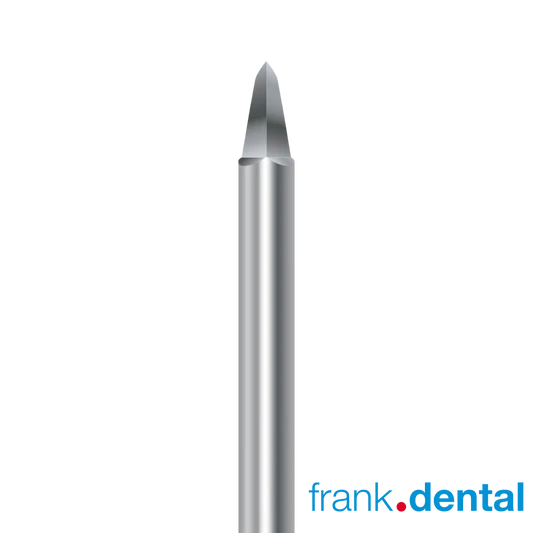
C.U-I3.020.RAXL-1 Pilot drill/Centre punch
Pack size: 5
Price per item: £19.95(ex. VAT) £23.94(inc. VAT)
Additional information
| Head Length | N/A |
|---|---|
| Total length | N/A |
| Shaft type | N/A |
| Shaft | N/A |
| Max Revolutions | N/A |
| Procedure | Surgical |
| Material | Tungsten Carbide |
| Shape | Pilot Drill |
| Grit | N/A |
| Material | Tungsten Carbide |
| Diameter | 020 |
| Shank | N/A |
General Enquiries
There are no enquiries yet.
Surgical burs Pilot Sterile
Frank Dental C.U-I3.020.RAXL Surgical Centre Punch & Pilot Drill – Tungsten Carbide 2.0 mm
Precision Surgical Pilot Drilling for Controlled Cortical Bone Penetration
The Frank Dental C.U-I3.020.RAXL Surgical Centre Punch and Pilot Drill is a precision tungsten carbide dental surgical instrument designed to penetrate cortical bone, establish the initial surgical entry point and provide a controlled starting position for subsequent drilling.
Manufactured by Frank Dental GmbH in Germany, the C.U-I3.020.RAXL combines a distinctive lance-style cutting geometry with tungsten carbide construction to provide clinicians with a highly precise instrument for surgical hard-tissue procedures.
The instrument is particularly useful when the clinician needs to accurately mark the intended drilling location before progressing through a surgical drilling sequence. By creating an initial pilot position within cortical bone, the bur can help establish the required starting point and reduce the tendency for a subsequent drill to move away from the intended location during initial engagement.
For dental clinicians undertaking implant and other bone-related surgical procedures, accuracy at the beginning of the drilling sequence is critical. A precisely positioned pilot point provides the foundation for the stages that follow.
The Frank Dental C.U-I3.020.RAXL has been developed specifically for this role.
Product Overview
Product: Frank Dental Surgical Centre Punch & Pilot Drill
Product Code: C.U-I3.020.RAXL
Manufacturer: Frank Dental GmbH
Instrument Type: Surgical centre punch / pilot drill / lance drill
Procedure: Dental surgery
Material: Tungsten carbide
Diameter: ISO 020 / 2.0 mm
Head Length: 7.0 mm
Overall Length: 34 mm
Maximum Speed: 3,000 rpm
ISO Code: 500.206.467.211.020
Application: Cortical bone penetration, surgical site marking and initial pilot drilling
Always follow the manufacturer’s current Instructions for Use, appropriate surgical protocols and the requirements of the surgical system being used.
What Is a Surgical Centre Punch and Pilot Drill?
A surgical centre punch or pilot drill is used during dental surgical procedures to establish an accurate initial entry point in bone.
One of the challenges when beginning a surgical drilling sequence is obtaining controlled engagement with the cortical surface. The outer cortical layer of bone can present a hard surface, and the initial positioning of the instrument is important when the clinician is trying to maintain the planned entry location.
The Frank Dental C.U-I3.020.RAXL is designed to penetrate cortical bone and mark the site for subsequent drills.
Rather than simply beginning the complete drilling sequence with a conventional drill, the clinician can use the centre punch or pilot drill to establish the initial location.
This creates a defined starting position from which subsequent instrumentation can proceed according to the clinician’s treatment plan and surgical protocol.
Why Is Accurate Initial Drilling Important?
Precision in dental surgery starts before the osteotomy or drilling sequence progresses to its final dimensions.
The location of the initial entry point can influence the direction of subsequent drilling. Establishing a clearly defined starting position therefore gives the clinician greater control over the beginning of the procedure.
This is particularly relevant when working on cortical bone, where an instrument can be more difficult to initially engage than in softer underlying bone.
The purpose of the Frank Dental Lance Pilot Drill is therefore straightforward but important:
penetrate the cortical surface, establish the intended drilling position and provide a guide point for subsequent drills.
This makes the C.U-I3.020.RAXL a useful addition to surgical bur selections where clinicians want a dedicated instrument for establishing their initial pilot position.
Tungsten Carbide Construction
The C.U-I3.020.RAXL is manufactured from tungsten carbide, a material extensively used in rotary dental instruments where efficient cutting and precision are required.
Tungsten carbide cutting instruments work differently from diamond instruments.
Where a diamond instrument uses abrasive particles to grind material, a tungsten carbide instrument incorporates precisely manufactured cutting geometry to remove material through its cutting surfaces.
For surgical applications, the design and geometry of the working section are therefore fundamental to the performance of the instrument.
The lance-style geometry of the C.U-I3 is specifically intended for the initial penetration and marking stage of a surgical drilling procedure.
The result is a specialist surgical instrument rather than simply a general-purpose dental bur.
Lance-Style Pilot Drill Design
The distinctive shape of the C.U-I3 gives it its alternative description as a Lance Pilot Drill.
The pointed working end is designed to provide a precise contact point with the cortical surface. This enables the clinician to position the instrument at the required starting location before initiating controlled penetration.
This geometry is particularly valuable at the beginning of a drilling sequence because the clinician is not attempting to immediately create the complete osteotomy.
Instead, the objective is to create a controlled pilot position that can guide the next instrument.
This makes the Frank Dental C.U-I3.020.RAXL suitable for clinicians looking for a dedicated dental surgical pilot drill, cortical bone drill or surgical centre punch.
2.0 mm / ISO 020 Diameter
The Frank Dental instrument carries the diameter designation 020, corresponding to a nominal diameter of 2.0 mm under the dental rotary instrument ISO coding convention.
This is an important distinction when identifying the instrument.
The 020 designation should not be interpreted as 0.20 mm.
The complete ISO reference listed by Frank Dental is:
500.206.467.211.020
Correct identification of the instrument and its dimensions is particularly important in surgical dentistry, where clinicians need to select instruments appropriate to their surgical protocol and the system with which they are working.
Extended 34 mm Overall Length
The C.U-I3.020.RAXL has an overall length of 34 mm, providing the extended geometry associated with the RAXL configuration.
Its working head length is 7 mm.
The additional overall length can provide useful access during surgical procedures where the clinician requires greater reach than a standard-length rotary instrument may provide.
Instrument length should always be considered alongside the clinical situation, handpiece being used, available access and the manufacturer’s surgical protocol.
Controlled Operating Speed
Frank Dental specifies a maximum rotational speed of 3,000 rpm for the C.U-I3.020.RAXL.
This is a surgical cutting instrument intended for controlled hard-tissue use rather than the high rotational speeds commonly associated with restorative air-turbine procedures.
Clinicians should always operate the instrument within the manufacturer’s specified limits and follow the appropriate surgical technique, irrigation requirements and Instructions for Use.
The maximum speed should never be exceeded.
Applications of the Frank Dental C.U-I3 Pilot Drill
The primary function of the C.U-I3.020.RAXL Surgical Pilot Drill is to establish a controlled starting point in cortical bone.
Its potential role within an appropriate surgical protocol includes:
- Initial penetration of cortical bone
- Marking the intended surgical drilling position
- Creating an initial pilot point
- Providing a starting guide for subsequent surgical drills
- Supporting accurate positioning during hard-tissue surgical procedures
- Establishing a defined entry location before progressing through a drilling sequence
The exact clinical sequence will depend upon the procedure being undertaken and the surgical system and protocol selected by the clinician.
Surgical Pilot Drilling and Implant Dentistry
Pilot drilling is particularly relevant within dental implant surgery, where accurate positioning of the initial osteotomy is an important part of the surgical workflow.
Modern implant treatment planning may involve conventional assessment, digital planning, CBCT imaging and guided or freehand surgical techniques.
Regardless of the workflow, the transition from treatment planning to the actual surgical site requires accurate instrumentation.
Where clinically appropriate within the selected implant protocol, a centre punch or lance-style pilot instrument can be used to establish the planned starting position before subsequent drilling.
The C.U-I3.020.RAXL should therefore be considered as a specialist surgical instrument for initial cortical penetration and site marking, rather than a replacement for the complete implant manufacturer’s drilling sequence.
Clinicians should always follow the implant system manufacturer’s recommended drilling protocol.
Why Use a Dedicated Centre Punch?
The beginning of a drilling sequence presents a different clinical requirement from enlargement of an already established osteotomy.
At the initial stage, the clinician’s priority is positioning.
Once an accurate entry point has been established, subsequent instruments have a defined location from which to begin.
A dedicated centre punch therefore allows the instrument geometry to be optimised specifically for initial engagement.
The pointed lance-style design concentrates the working area at the required entry location and enables the clinician to establish an initial pilot point before moving on to the next stage.
This is why centre punches and pilot drills remain valuable specialist instruments within dental surgical bur ranges.
German Dental Instrument Manufacturing from Frank Dental
Frank Dental GmbH specialises in the manufacture of dental rotary instruments and is based in Gmund am Tegernsee, Germany.
For clinicians, the quality of a rotary instrument is about considerably more than its external appearance.
Cutting geometry, concentricity, manufacturing tolerances, material selection and consistency all contribute to how a surgical bur performs.
The C.U-I3.020.RAXL forms part of Frank Dental’s range of specialist surgical rotary instruments and provides clinicians with a purpose-designed instrument for cortical penetration and initial pilot drilling.
Crown Dental Burs supplies Frank Dental rotary instruments to dental professionals across the UK.
Selecting the Correct Surgical Bur
No single surgical bur is suitable for every stage of a dental surgical procedure.
The appropriate instrument depends on what the clinician needs to achieve.
A round surgical bur, for example, may be selected for bone removal or refinement in particular situations.
A Lindemann-style cutter may be selected where efficient cutting or sectioning is required.
Long surgical carbide instruments can provide additional access.
A centre punch or pilot drill, however, has a much more specific role: establishing the initial drilling position.
Understanding these differences allows clinicians to build surgical bur selections based on the actual procedure rather than treating all surgical burs as interchangeable.
At Crown Dental Burs, our approach is centred around helping clinicians identify the correct shape, diameter, material, shank and length for the procedure they are performing.
C.U-I3.020.RAXL – Key Benefits
The Frank Dental C.U-I3.020.RAXL offers several characteristics that make it particularly suited to precision surgical work.
Its lance-style geometry provides a defined point for initial cortical engagement.
Its tungsten carbide construction provides a precision cutting instrument designed specifically for hard-tissue procedures.
The 2.0 mm diameter provides a clearly specified surgical dimension.
The 34 mm overall length offers an extended configuration for surgical access.
The 7 mm working head provides the dedicated cutting section.
And its specialist centre-punch design enables clinicians to establish an initial position before progressing to subsequent surgical drills.
Together, these characteristics make the C.U-I3.020.RAXL a valuable specialist instrument for clinicians who require controlled, accurate initial surgical drilling.
Frequently Asked Questions
What is the Frank Dental C.U-I3.020.RAXL?
The C.U-I3.020.RAXL is a tungsten carbide surgical centre punch and pilot drill manufactured by Frank Dental GmbH. It is designed to penetrate cortical bone, mark the intended drilling location and provide an initial guide point for subsequent surgical drills.
What is a dental pilot drill used for?
A dental pilot drill is used to establish the initial position of a surgical drilling sequence. The Frank Dental C.U-I3 is specifically designed for penetrating cortical bone and creating a controlled starting location for subsequent instrumentation.
Is the C.U-I3 a tungsten carbide bur?
Yes. The C.U-I3.020.RAXL is manufactured from tungsten carbide.
What diameter is the C.U-I3.020.RAXL?
The instrument is designated 020, corresponding to a nominal 2.0 mm diameter.
How long is the C.U-I3.020.RAXL?
Frank Dental specifies an overall instrument length of 34 mm and a head length of 7 mm.
What is the maximum speed?
Frank Dental specifies a maximum rotational speed of 3,000 rpm for the C.U-I3.020.RAXL.
Can it be used for implant surgery?
The instrument is designed for surgical cortical penetration and initial pilot drilling. Its use within implant dentistry must be determined by the treating clinician and should follow the relevant implant system’s surgical protocol and the instrument manufacturer’s Instructions for Use.
Why use a lance drill before another surgical drill?
The lance-style instrument allows the clinician to establish a defined initial position in cortical bone. Subsequent drills can then engage at this predetermined starting location.
For clinicians looking for a precision dental surgical pilot drill, the Frank Dental C.U-I3.020.RAXL Surgical Centre Punch and Pilot Drill provides a specialist tungsten carbide solution for initial cortical bone penetration and surgical site marking.
Manufactured by Frank Dental GmbH, the instrument combines a lance-style working geometry with a 2.0 mm diameter, 7 mm working head and 34 mm overall length.
Whether you are building a dedicated surgical bur kit or selecting individual rotary instruments for specific surgical procedures, Crown Dental Burs can help you identify the appropriate Frank Dental instrument for your requirements.
Product: C.U-I3.020.RAXL
Type: Surgical Centre Punch & Pilot Drill
Material: Tungsten Carbide
Diameter: 2.0 mm / ISO 020
Overall Length: 34 mm
Maximum Speed: 3,000 rpm
Manufacturer: Frank Dental GmbH
For professional dental use. Always use in accordance with the manufacturer’s current Instructions for Use and the relevant surgical protocol.
I verified the core technical data against Frank Dental’s official C.U-I3.020.RAXL listing. Frank Dental describes it specifically as a “Center punch and pilot drill”, while the Crown Dental listing identifies the procedure as surgical, the material as tungsten carbide and the shape as pilot drill. A distributor also specifically describes the Lance Pilot Drill as being used to penetrate cortical bone, mark the site and guide subsequent drills.


