Posted on

What is the best bur to cut through monolithic & layered zirconia crowns?

The choice of dental bur for cutting through a zirconia crown may depend on various factors, including the type of dental handpiece you are using, the specific characteristics of the zirconia material, and your personal preferences.

Diamond burs are often used for cutting through hard materials like zirconia. Diamond burs are known for their hardness and durability, making them suitable for working on materials with high levels of hardness. Additionally, water spray during the cutting process can help cool the bur and prevent overheating.

Specifically designed zirconia-cutting diamond instruments have been marketed with the claim that they avoid excessive heat and stress generation. Conversely, others have reported no significant difference in cutting efficiency between the dedicated zirconia instruments and conventional diamond instruments within the first 5 minutes of cutting.

Cutting zirconia is notoriously difficult because it has a very high strength, toughness and wear resistance. It is perhaps counter intuitive but what bur manufacturers have come to learn is that very fine grit burs are actually the most efficient burs for removing zirconia. Coarse grit burs tend to just immediately burn and lose efficiency immediately.

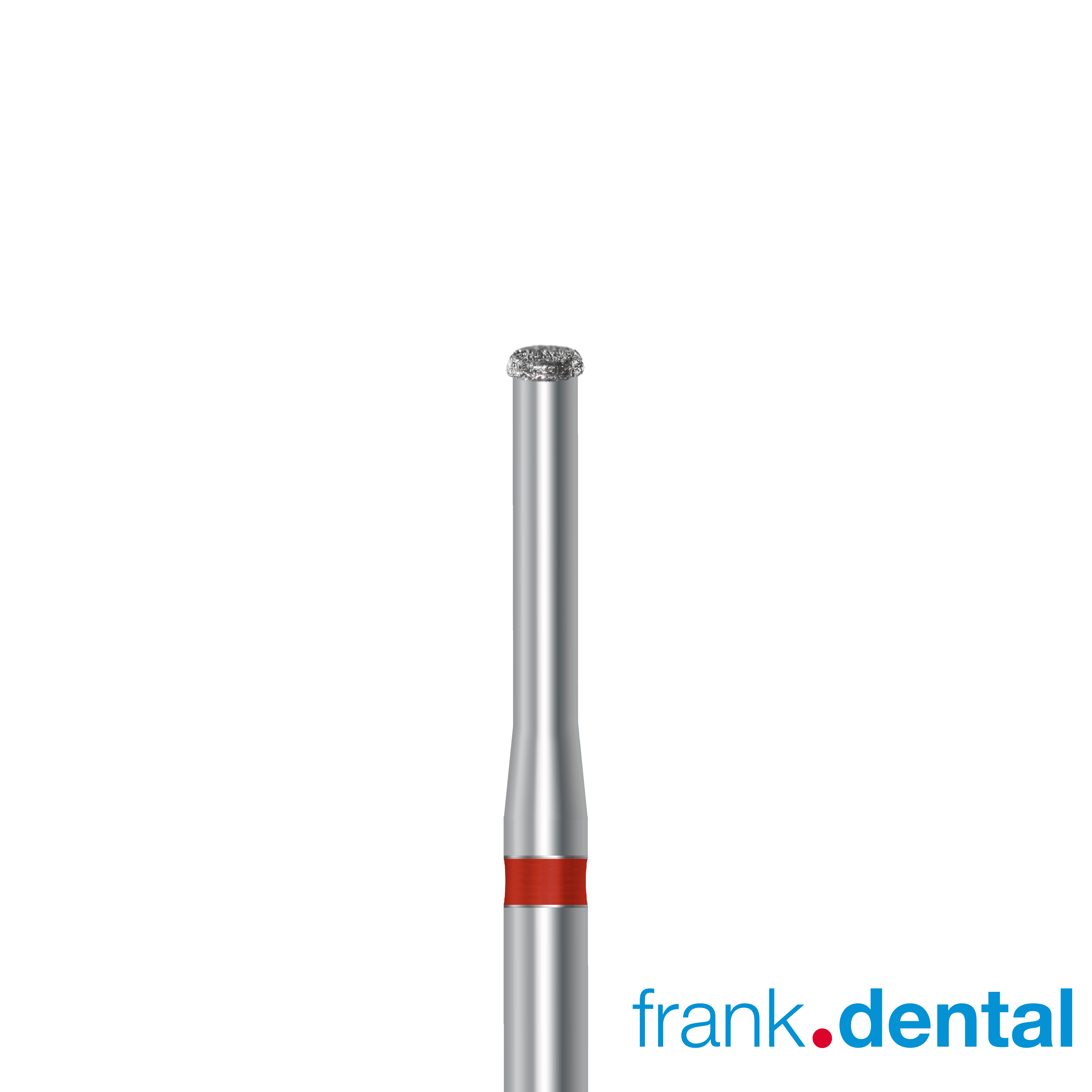
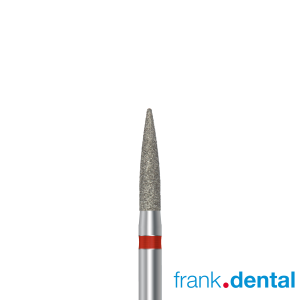
To ensure maximum life Frank Dental offer the D.Z881.012.C.FG (Yellow/Orange band) which contains a double layer of extra fine diamonds which is specific for cutting through a monolithic Zirconia Crown with ease.

What is the best bur to cut through a layered Zirconia Crown (Emax/Zirconia)?

Please note that if the zirconia crown you are removing has a layer of veneering porcelain then this is better removed initially with a coarse grit diamond bur then change to an extra fine grit diamond bur.

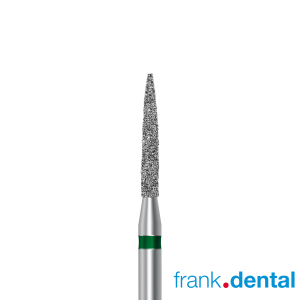
Frank Dental has manufactured a special 2 in 1 tool D.Z880.012.GC.FG (Green/Orange band) which contains 2 grits of diamond particles.  The top layer consists of a coarse grit natural diamond to cut through the top porcelain layer, once the coarse grit diamonds come in to contact with the Zirconia framework they start to disperse resulting in the extra fine layer diamond grit appearing to continue to cut through the remaining Zirconia restoration.


It is also important to use a good quality handpiece which has been regularly maintained, ideally a 1:5 speed increasing handpiece.  The optimal speed for the burs to be used is 160,000 RPM.  The other important factor is to ensure minimal pressure is applied to the bur when being used, excess pressure will result the diamonds burning from the head of the bur whilst generating sparks, if this happens reduce the pressure applied.

Posted on

The Evolution of Dental Burs: From Flint to Diamond-Coated

I. Introduction
Dental burs are rotary cutting instruments used in dentistry for a variety of purposes, including preparing cavities, removing tooth structure, and shaping dental implants. They come in different shapes, sizes, and materials, and have evolved significantly since their earliest use in ancient times. This blog post will explore the evolution of dental burs, highlighting the different materials and designs used throughout history, and how they have advanced to the modern diamond-coated burs used today.

II. Evolution of Dental Burs
A. Flint burs
The earliest known dental burs were made of flint and used by ancient civilizations, such as the Egyptians and the Mayans. These burs were handcrafted and had limited functionality.

B. Bronze burs
Bronze burs were used in ancient Greece and Rome and were an improvement over flint burs. They were made by casting and had a wider range of shapes and sizes.

C. Steel burs
Steel burs were introduced in the 19th century and marked a significant advancement in dental bur technology. They were stronger and more durable than bronze burs and could be sharpened and reused.

D. Tungsten carbide burs
Tungsten carbide burs were introduced in the 20th century and quickly became popular due to their hardness and durability. They were made by sintering tungsten carbide powder and had a longer lifespan than steel burs.

E. Diamond-coated burs
The most recent advancement in dental bur technology is the diamond-coated bur. These burs are made by coating a tungsten carbide bur with diamond particles, which provide superior cutting ability and longevity. Diamond-coated burs are now widely used in modern dentistry for a range of procedures.

III. Advancements in Dental Bur Design
A. Shape and size
Dental burs come in various shapes and sizes, each designed for a specific task. As technology has advanced, the shapes and sizes of dental burs have become more precise and specialized, allowing for greater accuracy and efficiency in dental procedures.

B. Coating materials
The materials used to coat dental burs have also improved over time. Diamond-coated burs are the most advanced, but other coatings, such as zirconium nitride and titanium nitride, have also been developed and provide improved cutting ability and durability.

C. Manufacturing techniques
Advancements in manufacturing techniques have also improved dental bur design. Computer-aided design (CAD) and computer-aided manufacturing (CAM) have enabled the production of more precise and complex dental bur shapes, allowing for greater customization and efficiency in dental procedures.

IV. Applications of Dental Burs
Dental burs are used for a variety of procedures in dentistry, including:

Preparation of cavities for fillings
Removal of tooth structure for crowns or bridges
Shaping dental implants
Root canal treatment

V. Care and Maintenance of Dental Burs
Proper care and maintenance of dental burs are essential for their longevity and effectiveness. Dental burs should be cleaned and sterilized after each use, and should be stored properly to prevent damage or contamination.

VI. Conclusion
In conclusion, dental burs have come a long way since their earliest use in ancient times. Advancements in materials, design, and manufacturing techniques have allowed for greater precision, efficiency, and longevity in dental procedures. As technology continues to advance, it is likely that dental burs will continue to evolve and improve in the future.

Posted on

Choosing the Right Dental Bur for Every Procedure: A Guide for Dental Professionals

I. Introduction

Dental burs are essential tools in any dental procedure. They are used to prepare teeth for fillings, crowns, and other restorative work, as well as for removing decay and shaping teeth. Choosing the right dental bur is crucial for achieving good results and preventing complications. This guide provides dental professionals with an overview of different types of dental burs, shapes, sizes, and materials, as well as tips for selecting and using the right bur for each procedure.

II. Types of Dental Burs

Dental burs are rotary cutting instruments that come in a variety of shapes, sizes, and materials. They are used in dental procedures to remove hard tissue, shape teeth, and prepare surfaces for restorative work. There are many different types of dental burs, including diamond burs, carbide burs, and finishing burs. Each type of bur has its own unique properties and uses. Choosing the right type of dental bur is important for achieving optimal results and reducing the risk of complications.

III. Dental Bur Shapes

Dental burs come in a variety of shapes, each designed for a specific purpose. Common dental bur shapes include round, pear, flame, cylinder, and inverted cone. Round burs are used for creating holes or preparing a surface. Pear-shaped burs are used for contouring, shaping, and smoothing. Flame burs are used for shaping the occlusal surface of posterior teeth. Cylinder burs are used for preparing flat surfaces or for finishing a restoration. Inverted cone burs are used for removing tooth structure, creating undercuts, or accessing areas that are difficult to reach. When selecting a dental bur shape, it is important to consider the specific procedure and the type of material being worked on.

IV. Dental Bur Sizes

Dental burs come in a variety of sizes, ranging from small to large. The size of the bur is determined by the diameter of the head. Common dental bur sizes include #1, #2, #4, and #6. Smaller burs are used for precision work, while larger burs are used for removing large amounts of material quickly. When selecting a dental bur size, it is important to consider the amount of tooth structure that needs to be removed, as well as the size and location of the tooth being worked on.

V. Dental Bur Materials

Dental burs can be made from a variety of materials, including stainless steel, carbide, and diamond. Stainless steel burs are the most commonly used type of bur and are typically used for basic cutting and shaping. Carbide burs are made from a combination of tungsten carbide and cobalt and are more durable than stainless steel burs. They are commonly used for cutting and shaping harder materials, such as enamel and dentin. Diamond burs are made with diamond particles embedded in the cutting surface and are the most abrasive type of bur. They are typically used for cutting and shaping ceramics and other hard materials. When selecting a dental bur material, it is important to consider the specific procedure and the type of material being worked on.

VI. Dental Bur Sterilization and Maintenance

Proper sterilization and maintenance of dental burs is important for preventing infection and ensuring the longevity of the bur. Dental burs should be sterilized using an autoclave or other approved sterilization method after each use. Burs should also be properly cleaned and lubricated to prevent rust and damage. It is important to inspect burs regularly for signs of wear or damage and to replace them as needed.

VII. Dental Bur Selection and Usage

Selecting the right dental bur for each procedure is important for achieving optimal results and preventing complications. When selecting a dental bur, consider the type of material being worked on, the size and location of the tooth, and the specific procedure. Always use the bur according to the manufacturer’s instructions and avoid using excessive force, which can cause damage to the bur and the tooth. It is also important to regularly inspect burs for signs of wear or damage and to replace them as needed.

VIII. Conclusion

Choosing the right dental bur is crucial for achieving good results and preventing complications in dental procedures. By considering the type of bur, shape, size, and material, as well as proper sterilization and maintenance techniques, dental professionals can select and use the right bur for each procedure. Regular inspection and replacement of burs is also important for maintaining the longevity of the bur and preventing damage to the tooth.

Posted on

The Role of High-Quality Dental Burs in Achieving Precision and Safety in Dentistry

Introduction:
Dental burs are important tools in dentistry, used for shaping, cutting, and polishing teeth. In this article, we will discuss the importance of high-quality dental burs in achieving precise and safe dental procedures. We will cover the benefits of using high-quality dental burs, the different types of burs, how to choose the right ones for specific procedures, and proper care and maintenance.

Importance of High-Quality Dental Burs in Precision Dentistry:
Precision is critical in dentistry, and high-quality dental burs can help achieve it. Using low-quality burs can result in uneven or inaccurate shaping or cutting, which can lead to problems down the line. High-quality burs provide a smoother and more accurate result, which can help ensure successful outcomes.

Benefits of Using High-Quality Dental Burs:
There are several benefits to using high-quality dental burs, including improved precision and accuracy, reduced risk of breakage and overheating, enhanced patient comfort, and increased efficiency and productivity. High-quality burs can also result in fewer complications and better overall patient outcomes.

Types of Dental Burs and Their Uses:
There are several types of dental burs, including carbide burs, diamond burs, ceramic burs, and steel burs. Each type has specific uses and benefits, and it is important to choose the right type of bur for each procedure. Carbide burs are the most common and are used for general purposes, while diamond burs are used for more precise work. Ceramic burs are used for polishing, and steel burs are used for cutting harder materials.

Choosing the Right Dental Burs for Specific Procedures:
Choosing the right dental burs for specific procedures is important to achieve the best outcomes. Factors to consider when choosing burs include the material being worked on, the shape and size of the bur, and the type of bur needed. It is important to choose burs that are appropriate for the task at hand to ensure successful outcomes.

Proper Care and Maintenance of Dental Burs:
Proper care and maintenance of dental burs is critical to ensure their longevity and effectiveness. Steps for proper care and maintenance include rinsing with water and using a brush to remove debris, soaking in a cleaning solution, and sterilizing using an autoclave or other sterilization method. Proper care and maintenance can help prevent contamination and damage to the burs.

Conclusion:
In conclusion, investing in high-quality dental burs is essential for achieving precise and safe dental procedures. By using high-quality burs, dentists can ensure better outcomes and enhanced patient comfort. Choosing